Posts

Showing posts with the label slavery

Coal Gas--The Original Gaslighting
Image
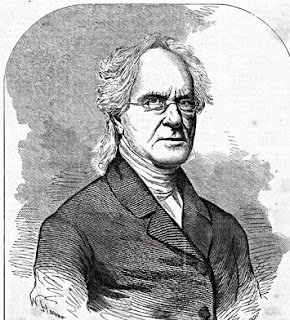
Coal Gas--The Original Gaslighting Rembrandt Peale      One of America's leading painters of the early 1800s was the first to use gas lighting. Rembrandt Peale opened the first American museum of any sort in Baltimore in 1806.  Trained in natural science as well as fine arts, Peale sought a way to illuminate his paintings using methods beyond candles and sunlight.  Candles and oil lamps were dim and expensive; sunlight was unpredictable. Peale had studied in Europe and was aware of early experiments in England using coal gas lamps to illuminate several streets and a town square.               Coal gas--later called town gas-- is produced by burning crushed lumps of coal in an oxygen starved atmosphere to produce methane and hydrogen, both of which burned brightly, as well as small amounts of nonflammable but poisonous gases such as carbon monoxide, carbon dioxide and nitrogen.   ...
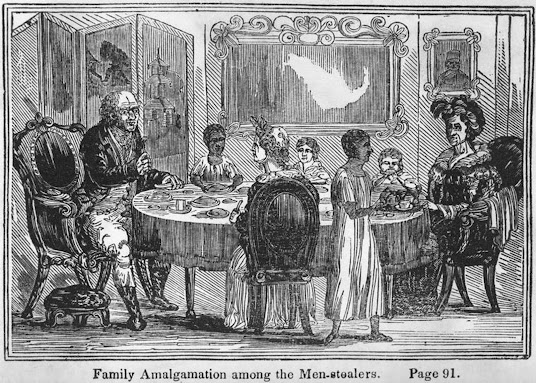
Amalgamationist & Abolitionists

Image
  Amalgamationist & Abolitionists "Amalgamation"--the code word for sexual relations between the races--was feared.  "Amalgamationists vs Abolitionists"      Anybody liberal enough to publicly espouse the view that Blacks were human and deserved the same legal rights as Whites was labeled "an Amalgamationist." Further, it implied legal inter racial marriages.   It was possible--quite common, in fact--to be an abolitionist and not  an amalgamationist.        Abolitionists were considered a Northern fringe group of eccentrics demanding the impossible.  Abolitionists existed before the founding of the republic, but the movement stirred the South's ire starting in the 1830s.      In modern terms they were a bit like PETA (People for Ethical Treatment of Animals.) For example, most people do not think animals should be treated with mindless cruelty--that does not mean most people think chickens should h...

Disposal of Slave Ships and Cargo May 1860

  The Slave trade May 19, 1860: Message on the Capture of the Slaver Wildfire An address by   President James Buchanan         On the 26th day of April last Lieutenant Craven, of the United States steamer Mohawk , captured the slaver Wildfire on the coast of Cuba, with 507 African negroes on board. The prize was brought into Key West on the 31st April and the negroes were delivered into the custody of Fernando J. Moreno, marshal of the southern district of Florida.      The question which now demands immediate decision is, What disposition shall be made of these Africans? In the annual message to Congress of December 6, 1858, I expressed my opinion in regard to the construction of the act of the 3d March, 1819, "in addition to the acts prohibiting the slave trade," so far as the same is applicable to the present case. From this I make the following extract:      Under the second section of this act the Pres...

Gotham's First Crime Boss Defends Himself

Gotham's First Crime Boss Defends  Himself     " The Captain," as Isaiah Rynders (1804-1885) was known, was a violent man and a violent racist.  He earned the captain's title for briefly captaining a sloop (one sail) packet boat along the Hudson River before becoming a gambler and knife fighter. Some time in the late 1830s he appeared in New York City and worked his way up in politics as the enforcing arm of the Tammy Hall Democrats.        Rynders owned a string of saloons in the city and gathered around him men who were young, violent, and looking for money.  He was head of the crime gang Dead Rabbits, a  thoroughly  criminal enterprise, and president of The Empire Club," which generally did the  rough  enforcement  for Tammy Hall.      "The Captain"  Rynders was a leader in what was called "The Astor Opera House Riot in May,1849.  (Worthy of its own future blog entry.)  In the 185...

Kidnapped! Part 2

Image
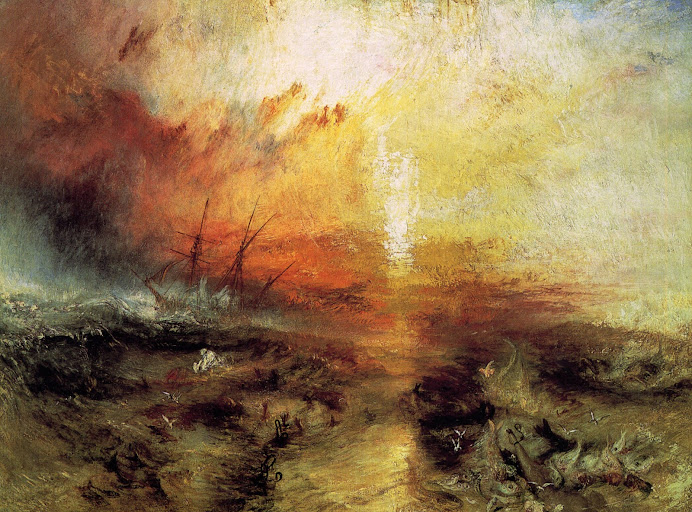
  WHAT IS A LIFE WORTH? Kidnapped! Part 2 The Slave Ship  1840 painted by JMW Turner depicts the drowning hands and limbs sinking into the waves as fish feast on them. If a slave ship captain thought a slave sick or a discipline problem, they were simply thrown overboard.  Many times, loss of slaves at sea was partly covered by insurance through Lloyds of London.  In the hold of a slave ship--choosing which ones  to throw overboard--  those who are too sick or those deemed troublemakers      What is an enslaved African worth to a white New York City banker?       Before the American Civil War, the single factor contributing the most to New York City's wealth was Wall Street's financing the trans-Atlantic slave trade even though s cholars believe only 5% of the millions of people captured and sent to the New World were taken to the United States  .        Wall Street banks arranged financing for m...

Kidnapped! Part 1

Image
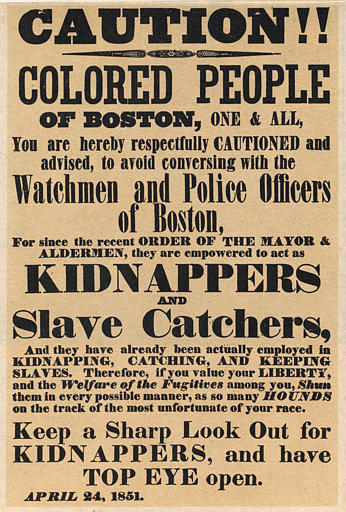
  Kidnapped!  In March, 1834, seven year old Henry Scott sat quietly at his desk practicing writing letters.  Most seven year boys find this boring, and Henry probably did, too.  His life was about to become far more exciting. The door to the classroom slammed open and a New York sheriff and a well dressed Southerner, Richard Haxell, burst into the room. Haxell nodded at Henry, “That’s the one, Sheriff.”  The sheriff yanked Henry out of his seat, announced Henry was a runaway (at seven?!) and left, Henry  tightly in tow  and squalling. Free Blacks had been snatched off the streets of New York more frequently as cotton plantations sprouted in the South, creating more demand for slaves. Naturally, this produced more “runaways.” Free Blacks were not exempt.  Kidnapping Free Blacks right off the street became profitable.  The kidnappers whisked their prey South to Baltimore to be sold. If stopped, they claimed to be returning a slave.   A v...

Emancipation Proclamation

Image
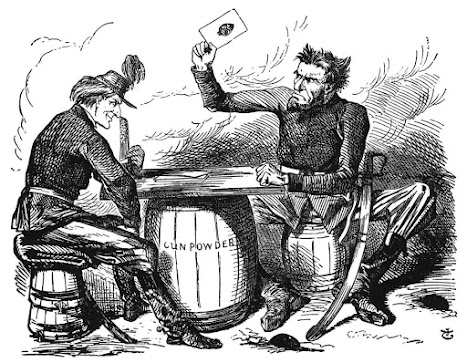
          The Emancipation Proclamation  "One Last Card" by John Tenniel appeared in the October 1862 issue of the British satire magazine Punch ( Tenniel later became famous as the first illustrator of Alice in Wonderland) Emancipation Proclamation             Lincoln’s Emancipation Proclamation was not a straightforward freeing of all slaves. In fact, it pleased nobody except those held in bondage behind Confederate lines on whom it had no effect. It was not meant as a humanitarian gesture, rather as an attempt to entice states in rebellion to rejoin the Union.               It was a political ploy which did not work as intended.             Lincoln waited to issue the proclamation until the Union had won a great military victory—and Union victories were few and minor until Se...